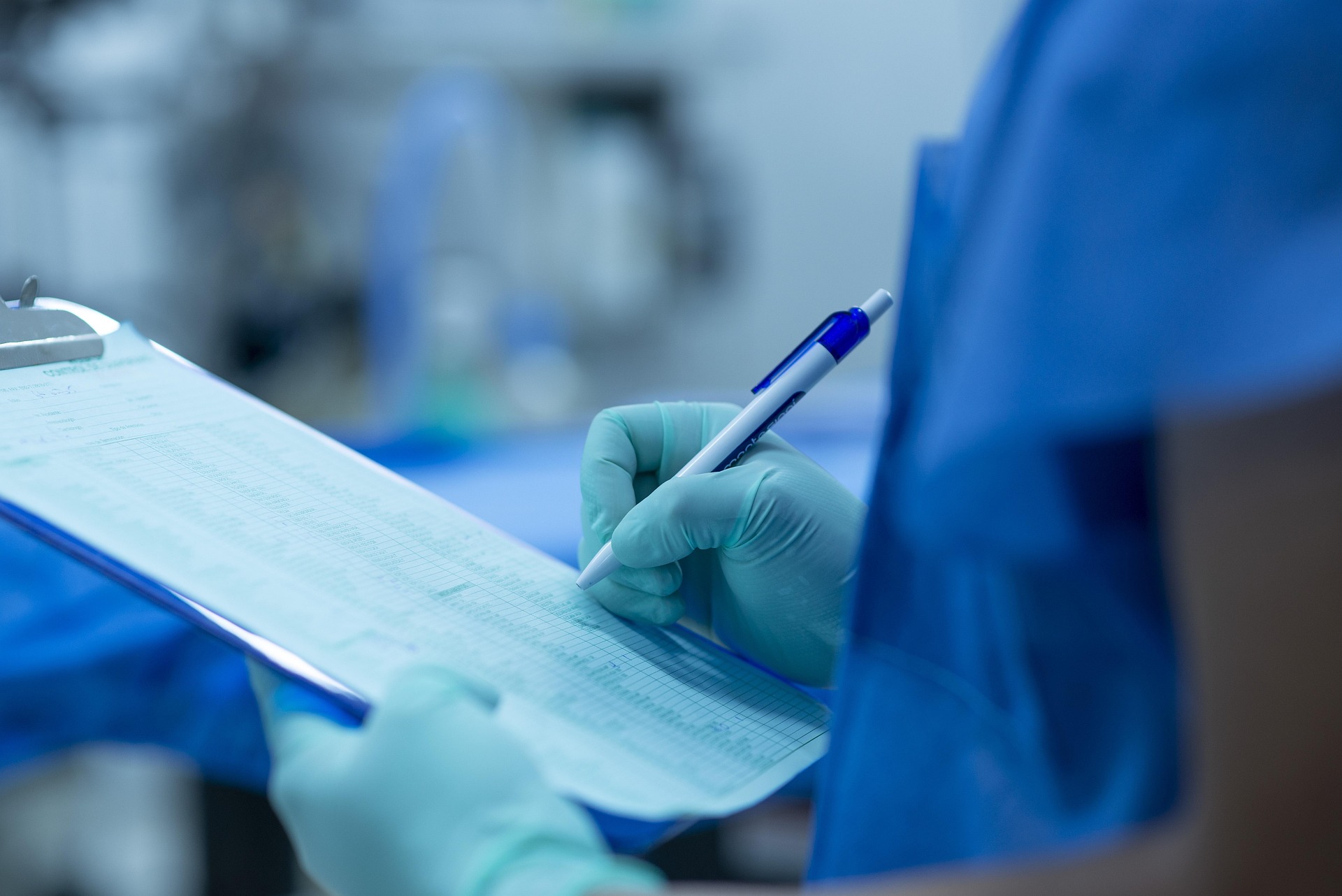
Modern knee surgery is continually evolving. High-definition imaging, computer guidance, and improved implant materials are helping surgeons plan with greater precision, operate more accurately and support faster, safer recovery. Here’s how these advances come together in my practice in Marbella.
By Dr Thomas Boerger, MD FRCSI (Tr&Orth), Consultant Orthopaedic & Trauma Surgeon
About me and my private practice
I am a consultant orthopaedic knee surgeon specialising in partial knee replacement (medial, lateral, and patello-femoral), total knee replacement, total hip replacement, and knee ligament reconstruction. I’m registered and licensed in the UK, Gibraltar, and Spain. I operate at HC Marbella International Hospital, an elite private medical facility, and also consult in Gibraltar and Marbella.
Advanced diagnostics
Good decisions start with good data. At HC Marbella we use a state-of-the-art diagnostic imaging suite, including 3-Tesla MRI for high-resolution scans and 64×2-slice CT for fast, detailed 3D imaging. In Gibraltar, patients have access to a modern imaging department at GibMed Hospital. These tools help us:
- map cartilage, bone, and ligament status with clarity
- plan implant sizing and positioning before the procedure
- confirm whether arthritis is limited to one compartment (which may make you a candidate for a partial knee)
Artificial intelligence is increasingly used to assist radiologists in interpreting complex imaging. I’m open to AI where it demonstrably adds value, particularly in image analysis and planning, while remaining committed to techniques with proven clinical benefit.
Oxford Partial Knee Replacement
If arthritis is confined to a single compartment (inside/medial, outside/lateral or kneecap/patello-femoral), a partial knee replacement can be an excellent option. It preserves more of your natural bone and ligaments, often leading to a knee that feels more “normal” in everyday activities. Partial knee replacement, relatively speaking, is a smaller operation, which allows you to recovery sooner. When wear is limited to one part of the knee, we often use the well-proven Oxford partial knee (unicompartmental). Because it preserves healthy bone and both cruciate ligaments, it’s generally less invasive than a total knee, so, for the right patient, there’s typically a lower risk of complications.
Many patients report the knee feels more natural earlier in the recovery. Here’s why:
- Less disruption to the knee: Partial knee surgery resurfaces only the worn compartment and preserves healthy bone, cartilage and both cruciate ligaments (including the ACL). That often means less swelling and easier early movement.
- More natural knee mechanics: Because your own ligaments remain, the knee can keep more of its native “glide-and-roll,” which some people perceive as a more familiar feeling.
- Smaller operation overall: Typically, a smaller incision and fewer bone cuts, which can translate to quicker confidence with walking and stairs.
Bilateral Partial Knee Replacement
suitable cases we can also treat both knees in the same session (simultaneous bilateral partial knees), meaning one anaesthetic, one hospital stay and one recovery, all within a single, well-coordinated care plan. Suitability is always assessed individually after a thorough review of your health and imaging during the consultations. Please refer to the testimonials section of my website to see other patients sharing their experience of a Bilateral Partial Knee Replacement.
Total Knee Replacement
When arthritis is more widespread, total knee replacement remains the most reliable solution. I use established implant systems from leading manufacturers, including options compatible with computer guidance and robotic assistance. This enables a consistent, reproducible technique tailored to your anatomy and goals.
Fixation choices: cemented vs cementless
There are two main ways to fix the implant to bone. These are:
- Cemented fixation: time-tested and suitable for most patients; a medical cement secures the implant immediately.
- Cementless (press-fit) fixation: designed so that bone grows into the implant’s porous surface, creating a long-term biological bond. This is increasingly considered for younger, more active patients with good bone quality and can reduce the surgical steps associated with mixing and curing cement.
I offer both methods and will recommend the approach that best suits your bone quality, age, activity level, and implant design.
Advanced materials that improve durability
Implant longevity depends heavily on materials:
Highly cross-linked polyethylene (XLPE): modern bearing surfaces designed to resist wear far better than earlier plastics.
Advanced femoral component surfaces (e.g., oxidised zirconium/ceramic-like finishes): engineered to combine toughness with excellent wear characteristics and, in some cases, reduced metal ion exposure, useful for selected patients with metal sensitivities.
I match the material choice to your anatomy, activity profile, and any relevant allergies.
Your patient journey
This is how your experience will look like:
- Accurate diagnosis: 3T MRI and advanced CT, with AI support where appropriate.
- Shared decision-making: partial vs total knee, cemented vs cementless, implant options and realistic goals.
- Enhanced recovery: evidence-based pain control and a specialist physiotherapy programme to help you get moving safely and confidently.
Frequently asked questions
- Will I qualify for a partial knee?
Only if arthritis is confined to a single compartment and your ligaments are intact. Advanced imaging helps us confirm this. - Should I choose cementless fixation?
It can be an excellent option for younger, active patients with good bone quality. For many others, cemented fixation remains an outstanding, reliable choice. We’ll decide together after assessing your knee.
Final word
Better imaging, smarter planning, steadier execution, and more durable materials are the foundations of contemporary orthopaedic knee surgery. My commitment is to pair these proven tools with careful clinical judgement so the operation you have is the one most likely to restore your mobility and ‘give you back your life’.
Please bear in mind that this article is for general information only and does not replace a consultation. To discuss your specific situation, please arrange a face-to-face appointment with me in Marbella or Gibraltar.